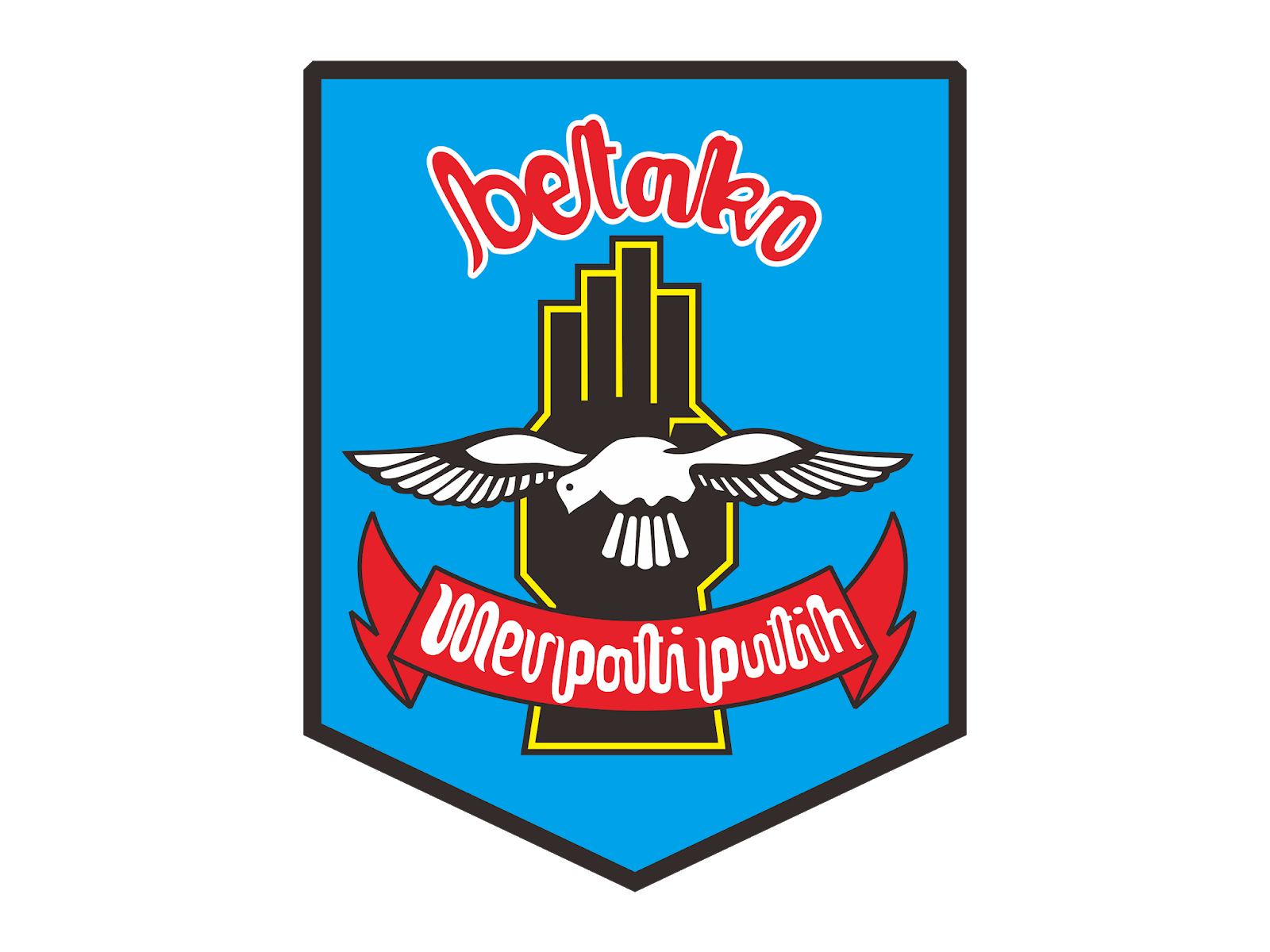
PPS BETAKOYOGYAKARTA, INDONESIA · 1963

THE ART OF MOVEMENT. THE ART OF SELF.

MERPATI PUTIH.

Strength begins with stillness.

Yogyakarta, established 2 April 1963

The Merpati Putih uniform

Three pairs of ties. Three pledges.

Three pairs of lacing holes near the neck recall God, nature, and the world. Their number also recalls the three Members’ Pledges.

  • Obey and believe in God Almighty
  • Serve and devote oneself to the homeland, nation, and Republic of Indonesia
  • Remain loyal and obedient to the school

Five sides. One foundation.

The five-sided neckline represents Pancasila. The uniform reminds members to uphold Indonesia’s national foundation and put its values into practice.

  • Belief in God
  • Humanity
  • Unity
  • Democracy
  • Social justice

The emblems we wear.

MP is on the wearer’s left chest, IPSI on the right. They identify the school and its connection with the Indonesian pencak silat community.

  • Merpati Putih — the bowed dove recalls humility; blue stands for peace.
  • IPSI — Ikatan Pencak Silat Indonesia, the shared organisation of Indonesian pencak silat schools.

Worn with meaning. Lived through action.

Four principles of character and conduct that every member must uphold and practise.

  • Be honest and compassionate
  • Believe in yourself
  • Maintain harmony in everyday conduct
  • Internalise and practise these principles to deepen devotion to God Almighty.
GRADES

Grow.
One grade at a time.

From a white belt to Inti II. Explore the stripes and emblem that mark each stage of training.

A figure in a white shirt and black trousers, MP on the left chest, IPSI on the right, belt knot at the wearer’s left.
MP on the left chest, IPSI on the right, from the wearer’s perspective.

Dasar II

Plain red

Developing basic movement.

White shirt

Represents sincerity and openness, with a red collar completing the uniform’s identity.

Black trousers

Represents steadfastness.

Red belt

Worn from Dasar II onward; five lines of stitching are linked to Pancasila.

Each grade is attained through practice and an instructor’s guidance.

PHILOSOPHY

Stillness
is strength.

The name draws on the Javanese phrase Mersudi Patitising Tindak Pusakane Titising Hening: seeking truth with a quiet mind.

“My contribution may be modest, but my sincerity is real.”

An editorial translation of the school’s motto

HumilityPeaceSelf-control
MERMersudi
PAPatitising
TITindak
PUPusakane
TITitising
HHening

Knowledge grows with humility. Stillness guides our actions.

GETTING ACQUAINTED

Born in Yogyakarta.
Alive in practice.

An unarmed martial arts school from Yogyakarta, guided by a philosophy of seeking truth with a quiet mind.

Founded

2 April 1963

The school’s founding date.

Rooted in

Yogyakarta

The city where the school was established.

Full name

PPS Betako

Perguruan Pencak Silat Beladiri Tangan Kosong Merpati Putih: an Indonesian school of unarmed pencak silat.

Pencak silat network

IPSI

Merpati Putih is part of Ikatan Pencak Silat Indonesia.

EMBLEM

The identity
we carry.

The school’s emblem carries meanings of civic principles, resolve, peace and humility.

Merpati Putih emblem
PPS Betako Merpati Putih

Choose a number to highlight and zoom into an emblem element.

The identity we carry.
ElementMeaning
1. Five-sided outlineThe pentagonal shape represents Pancasila as the school’s foundation.
2. Red borderThe red outline represents unity within the Merpati Putih family in preserving and developing Indonesian culture.
3. Blue groundBlue represents peace in our relationships, from our local communities to friendships across nations.
4. Javanese-inspired letteringThe lettering points to the knowledge’s Javanese roots. BETAKO abbreviates unarmed self-defence.
5. Black palmThe black hand represents steadfastness and the spirit of mutual cooperation.
6. Yellow outlineThe yellow outline represents the flourishing of the school’s knowledge.
7. The bowing doveLike ripened rice bending low, learning is expected to nurture humility and calmness.
8. Red ribbon, white letteringRed and white represent courage grounded in purity of intention.
HISTORY

A living heritage.
Always moving.

From knowledge passed down through generations to a school that grows with its members.

Traditional roots

The Mataram connection

Merpati Putih knowledge was passed down through generations within the Mataram royal household.

Sang Guru

Saring Hadi Poernomo

Sang Guru passed his knowledge to his sons Poerwoto Hadi Poernomo (Mas Poeng) and Budi Santoso Hadi Poernomo (Mas Budi), known as the Guru Besar.

1962

A mandate to share

The teacher entrusted his sons with sharing and developing the family’s knowledge for the wider community.

1963

The school is established

PPS Betako Merpati Putih was established on 2 April in Yogyakarta.

1968–1970s

Reaching wider communities

The Madiun branch developed in 1968, followed by expansion in Jakarta and training for security and military units in the 1970s.

National network

Within the IPSI community

Merpati Putih joined the IPSI community in developing Indonesian pencak silat.

1999 / 2000

A connection with Utah

Merpati Putih began developing in Utah in 1999, followed by academy licensing in October 2000.

2026

A continuing tradition

The national grading examination and tradition gathering took place at Parangkusumo on 11 July 2026, bringing members together in training and reflection.

PRACTICE

Movement. Breath.
Self-control.

Our training brings together movement, breath, sensitivity, and self-control.

Breathing practice as a foundation

Breathing practice accompanies physical training from the basic grades, without mantras, incense, or ritual empowerment.

Self-defence

Movement training develops coordinated steps and techniques for self-defence.

Getaran

Getaran practice explores sensitivity to objects and obstacles through progressive, instructor-led training.

Stamina & strength

Training builds stamina and develops physical ability. Breaking demonstrations require preparation and an instructor’s guidance.

Traditional treatment

Applications in healing are studied under specialised guidance. Health diagnosis and treatment remain the responsibility of medical professionals.

Training progresses under an instructor’s guidance according to each member’s grade and readiness.

TRAINING & TRADITION

Built through practice.

Training groups provide a place to practise; shared traditions connect members with the school’s history.

An original illustration of a quiet shoreline and hills, not a geographic map.
01

A rhythm of practice

Regular practice takes place in local training groups, or kolat. Contact the group’s organisers to find a suitable schedule and class.

02

Suro at Parangkusumo

The Suro tradition at Parangkusumo brings members together for training and reflection on the school’s values. Dates follow the organisers’ schedule.

03

Retracing paths in Menoreh

The heritage walk through the Menoreh hills invites members to retrace the school’s journey. Routes and dates follow the event programme.

VALUES & PLEDGES

Pledges, guidance
and responsibility.

Members’ pledges and the teacher’s guidance place moral responsibility within everyday life.

Members’ Pledges

  1. Obey and believe in God Almighty
  2. Serve and devote oneself to the homeland, nation, and Republic of Indonesia
  3. Remain loyal and obedient to the school

Sang Guru’s guidance

Four principles of character and conduct that every member must uphold and practise.

  1. Be honest and compassionate

    Act with honesty and show compassion towards all living beings.

  2. Believe in yourself

    Build confidence in your abilities through practice and faith in the greatness of God.

  3. Maintain harmony in everyday conduct

    Keep your attitude, words, and actions in harmony with your surroundings.

  4. Internalise and practise these principles

    Live these three principles to nurture and deepen devotion to God Almighty.

Self-control

Members uphold peace, practise self-control, and use their martial skills responsibly.

Respecting the insignia

The school’s emblems and insignia are treated with respect and used in accordance with organisational rules.

ORGANISATION

Preserving our practice.
Guiding our school.

Our teaching and organisational bodies work alongside one another to preserve our heritage, support members, and develop the school.

Teaching and heritage

Ahli Waris (Heirs)

The highest authority over Merpati Putih’s inherited knowledge: Nehemia Budi Setyawan, son of the late Mas Budi, and the descendants of the late Amos Priono Tri Nugroho, son of the late Mas Poeng.

Dewan Kasepuhan

Advises and supports the Ahli Waris and Dewan Guru.

Dewan Guru

Assists the Ahli Waris in developing and overseeing teaching at every level. Since the 2022 national congress, all members hold equal standing as Members of the Dewan Guru, with no chair position.

Organisational management

Chair of the National Board

Letnan Jenderal TNI Mohamad Hasan

The National Board manages organisational affairs, administration, sporting achievement, and external relations. It works through regional, branch, special branch, and training group boards.

  1. National BoardNational level
  2. Regional BoardsProvincial level
  3. Branch / Special Branch BoardsCities, regencies, or institutions
  4. Training Group BoardsLocal training groups

Dewan Guru

2023–2028 term

  • Mas Nardjo
  • Mas Poer
  • Mas Mul
  • Mas Dalidjan
  • Mas Sutji
  • Mas Haris

Perangkat Dewan Guru

Supports training, examinations, and consistent teaching.

  • Mas KellyBranch: Jakarta Timur
  • Mas IndraBranch: Kab. Bekasi
  • Mas FerryBranch: Bandung
  • Mas SigitBranch: Kartosuro
  • Mas MarsyelBranch: Jakarta Selatan
  • Mas AntonBranch: Jakarta Timur

Calon Perangkat Dewan Guru

Candidates for the Dewan Guru support team.

  • Mas CokordeBranch: Bali
  • Mas ArvinBranch: Khusus LAN
  • Mas AchmadBranch: Kota Bekasi
PUBLIC RECORD

Growing through
shared achievements.

Championships, demonstrations, and shared activities are part of our journey in developing pencak silat.

Results at Paku Bumi Open

MP BINUS athletes earned medals at Paku Bumi Open IV in February 2018.

In the Museum Kopassus record

Merpati Putih achieved the “151 Dragon” MURI record in 2021.

A national championship

The 2024 Merpati Putih National Championship was opened by the Minister of Youth and Sports.

FAQ

What to know
before you begin.

Brief answers to common questions. Training and membership arrangements should be confirmed with the local group.

Find a training group
What is Merpati Putih?

An Indonesian school of unarmed pencak silat established in Yogyakarta on 2 April 1963.

What does the name mean?

Merpati Putih brings together Mersudi Patitising Tindak Pusakane Titising Hening: seeking truth with a quiet mind.

Does training involve incantations?

Our training centres on physical and breathing practice, without mantras, incense, or ritual empowerment.

Who founded the school?

Sang Guru Saring Hadi Poernomo passed his knowledge to his sons, Poerwoto and Budi Santoso Hadi Poernomo. They developed the school as its Guru Besar.

How do the grades differ?

Grades mark stages of education and identification, from Dasar I to Inti II. The school’s guidelines define the curriculum.

How often does training take place?

Each training group sets its own schedule. Contact the organisers for available days, times, and classes.

At what age can someone join?

Contact your local training group to find the appropriate age group and class for a prospective member.

Are members given the title pendekar?

We use the terms member and pesilat for participants in the school’s activities and education.

Why is the belt red?

The red belt is worn from Dasar II. Its five lines of stitching represent Pancasila, while the stripe colour marks the grade.

How can I join?

Contact a regional board, branch or training group through its organisational channel. Ask about schedules, requirements, fees and registration before attending.

How is Suro connected with the tradition?

Suro, a month in the Javanese calendar, is part of the school’s traditions. Gatherings follow the dates announced by the organisers.

How does MP compare with other schools?

Every school has its own history and approach. We uphold fellowship, mutual respect, and a shared commitment to preserving pencak silat.

Where should I start?

Start by contacting your nearest training group. Its organisers will explain the classes, equipment, and registration process.

GETTING STARTED

Your first step.
Starts here.

Find a local training group, speak with its organisers, and follow their guidance on getting started.

  1. 01
    Find a training group

    Search training groups by name or address, or find a branch in your area.

  2. 02
    Ask about the essentials

    Confirm admission ages, schedules, fees and equipment.

  3. 03
    Visit and get acquainted

    Follow the local admission process and the trainer’s guidance.

The interactive directory requires JavaScript. Training group information is also available at Mersudi.

GLOSSARY A–Z

The language of
Merpati Putih.

Explore the terms used in our training and organisation.

Ahli Waris
Custodians of the inheritance and continuity of Merpati Putih knowledge.
Betako
An abbreviation of beladiri tangan kosong: unarmed self-defence.
Getaran
Sensitivity training involving objects and obstacles within Merpati Putih education.
Guru Besar
The title used for Poerwoto and Budi Santoso Hadi Poernomo in the school’s history.
Hening
Stillness in seeking and taking right action.
IPSI
Ikatan Pencak Silat Indonesia, the Indonesian pencak silat organisation.
Janji Anggota
Three members’ pledges concerning faith, service and loyalty.
Kolat
A training group in which members practise.
Mersudi
To seek until finding.
Napak tilas
A commemorative journey retracing earlier experiences.
Olah napas
Breathing practice within the school’s training.
Pembajaan
A formative activity described alongside grading examinations.
Pengcab
The branch board.
Pengda
The regional board.
PP
The Central Board.
Sang Guru
The title used for Saring Hadi Poernomo in the school’s history.
Suro
The Javanese calendar month associated with the school’s gathering.
Tata gerak
The practice of coordinated martial movement.
Tindak
To go. In Merpati Putih’s philosophy, it means going in search of truth.
UKT
Ujian Kenaikan Tingkat: a grading examination. UKTNas is held at national level.